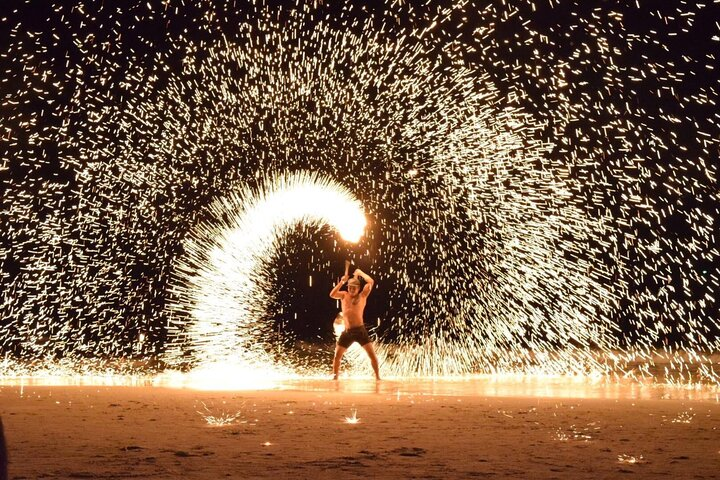
Few moments define a Dubai desert safari like the fire show, dancers spinning flaming torches against a pitch-black desert sky, right after a red-dune sunset and a full Bedouin-style BBQ dinner.
If you’re searching for the fire show desert safari Dubai timing, how much it costs, or which package actually includes it, this guide covers everything you need before you book. As ESA Tours, a Dubai-based desert safari and adventure tour operator running evening safaris out of Al Badayer daily, we’re breaking down exactly when the fire show happens, what it costs across our packages, and the practical tips that make the difference between a good desert evening and a great one.
A fire show desert safari is an evening desert safari package that combines traditional dune bashing, a Bedouin-style desert camp experience, and a live entertainment segment featuring fire performers, typically alongside belly dance and Tanoura dance shows. It’s the signature closing act of most premium desert safari packages in Dubai, performed after dinner once the desert has gone fully dark, which is what makes the flames and choreography visually striking.
The fire show itself usually involves one or two trained performers using flaming poi, fire staffs, or fire fans, moving through choreographed routines set to Arabic music. It’s not a standalone activity you can book “just the fire show”; it’s bundled into a full desert safari itinerary that includes pickup, dune bashing, camel rides, sandboarding, dinner, and other cultural performances.
Timing is the detail most first-time bookers get wrong, so it’s worth being precise about it.
The fire show takes place after dark, generally between 8:00 PM and 9:00 PM, once dinner service is winding down at the desert camp. It’s scheduled deliberately at this point in the evening for two reasons: fire performances need low light to have visual impact, and by this stage in the safari, guests are seated, fed, and settled in for the entertainment segment rather than mid-activity.
A typical evening desert safari with a fire show follows this general schedule:
Exact timing shifts slightly by season, winter safaris (November to March) often start earlier since sunset comes sooner, while summer schedules push pickup later to avoid peak daytime heat.
Winter (November–March) is the ideal season, when cooler evening temperatures make sitting outdoors for the entertainment segment far more comfortable, and desert visibility is clearer for both sunset and fire show photography.
Summer safaris (June–August) still run the same evening itinerary and fire show, just with higher evening temperatures; the camp’s shaded seating and cold drinks make it manageable, but if comfort is a priority, winter is the stronger choice.
Pricing depends on which safari package you choose, since the fire show comes bundled with the wider evening itinerary rather than sold separately.
| Package | Price (per person) | Duration | Includes Fire Show? |
| Standard Desert Safari | AED 550 | 5–6 hours | Yes |
| Premium Desert Safari | AED 650 | 5–6 hours | Yes, plus VIP seating & extras |
Both our Standard Desert Safari and Premium Desert Safari packages include the fire show, Tanoura dance, and belly dance as part of the evening entertainment.
The difference between the two comes down to seating and service level: the Premium package adds VIP camp seating, a more curated dining setup, and a more personalised pickup experience, while Standard covers the same core itinerary, dune bashing, camel ride, BBQ buffet, and fire show, at a lower price point.
Prices can vary with group size, private vehicle requests, add-ons like quad biking or a dune buggy ride, and seasonal promotions, so it’s worth confirming current rates directly before booking.
Beyond the fire show itself, a full evening safari package typically bundles in:
Some premium packages also add henna painting, falcon photo opportunities, and VIP majlis-style seating closer to the performance stage.
A little preparation goes a long way toward making the fire show and the evening around it genuinely memorable rather than just another tour stop.
Arrive at the performance area a few minutes before the show starts and choose seating in the front two or three rows, slightly off-centre rather than dead-centre; fire performers often move in a circular routine, and a slightly angled seat avoids having your view blocked by the performer’s back during key moments.
Evenings in the desert cool down quickly once the sun sets, even in summer. Dress in breathable, lightweight clothing for the daytime activities, but bring a light jacket or shawl for the entertainment segment after dark; this applies year-round, not just in winter.
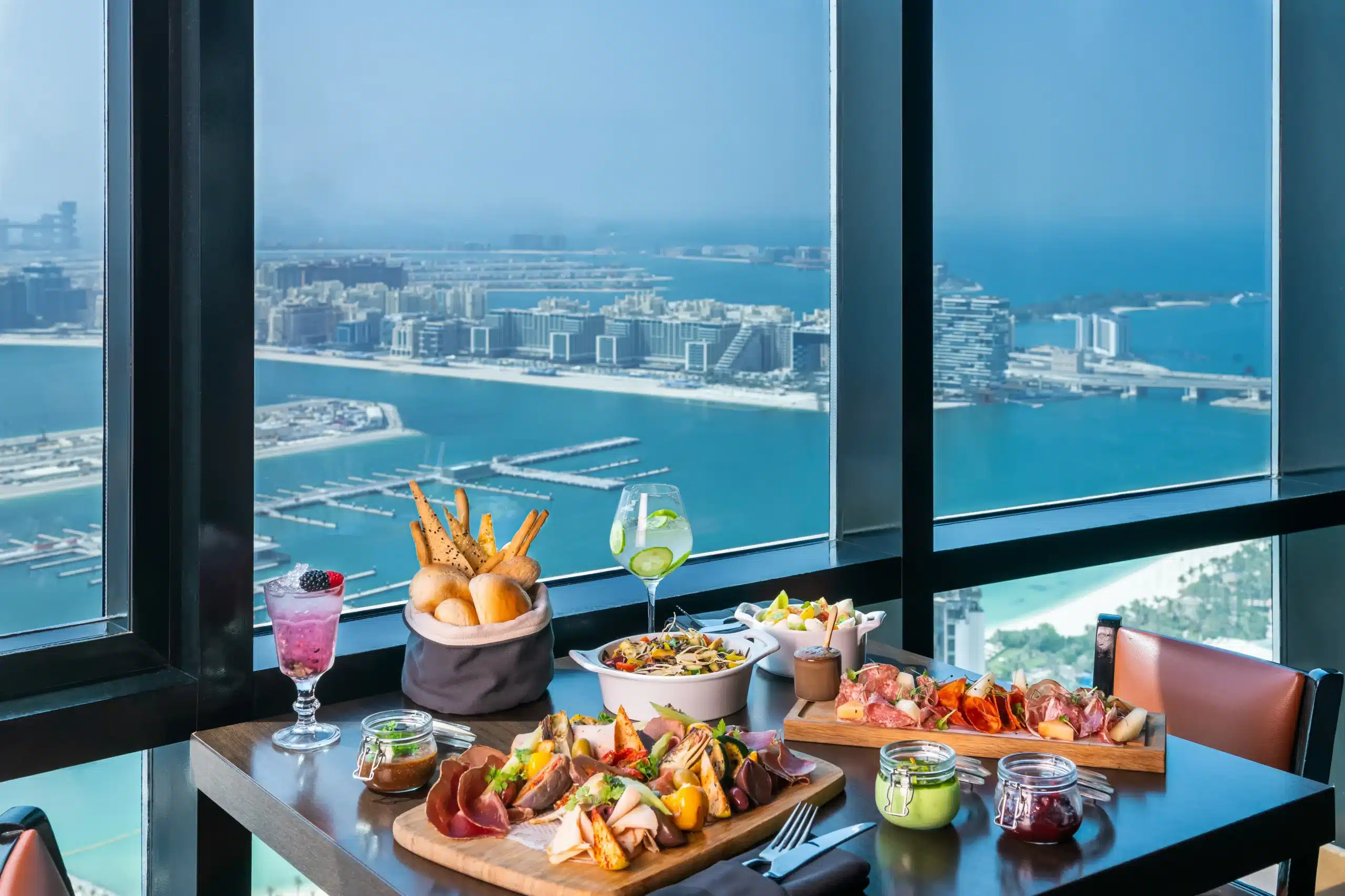
BBQ buffets typically include grilled meats, vegetarian dishes, salads, and regional specialities, with most operators able to accommodate dietary requests (vegan, Jain, halal, etc.) if flagged at booking. Avoid overly heavy meals right before dune bashing if that’s part of your itinerary; it’s more comfortable to eat after the activity, which is also how most evening safari schedules are structured.
The fire show isn’t performed in isolation; it’s staged alongside two other traditional performances that give the evening its cultural texture, and understanding what each one is helps you know what to expect.
The Tanoora dance is inspired by Sufi whirling traditions and is one of the most iconic performances at a Dubai desert safari. The dancer wears a brightly colored, multi-layered skirt that spreads out dramatically while spinning continuously, often for several minutes without stopping. Many performances also feature illuminated LED costumes, creating a mesmerising visual display. Depending on the camp’s schedule, the Tanoora dance is usually performed just before or immediately after the fire show.
Belly dance, also known as raqs sharqi, is a traditional Middle Eastern dance style celebrated for its graceful hip and torso movements. Performed to Arabic music, it adds elegance and energy to the evening’s entertainment. Most desert safari camps present the belly dance either before the fire show to build excitement or as the final performance to conclude the cultural program.
Fire performances are staged by trained performers who follow strict safety protocols, and reputable desert camps maintain a clear buffer zone between the performance area and audience seating. As an added layer of safety, camps typically keep fire extinguishers and first-aid equipment on standby during any fire performance, and performers work in open-air settings away from tents, drapes, or other flammable structures.
For guests, there’s no active participation required or expected; you’re a spectator, seated at a safe distance, watching a choreographed routine. The main practical consideration isn’t the fire show itself but general desert safari safety: booking with a licensed operator, wearing seatbelts during dune bashing, and following your guide’s instructions during camel rides and sandboarding, which are the more physically active parts of the evening.
Not every desert safari in Dubai includes a fire show, so it’s worth understanding where it fits among other desert experiences:
If you want the dune bashing thrill plus more hands-on off-road driving before the evening entertainment, our sister site ESA Dune Buggy Dubai runs self-drive and guided dune buggy tours across the same Al Badayer red dunes, which pair well as a daytime add-on to an evening fire show safari. For those who’d rather ride than drive a 4-seater buggy, our quad bike Dubai tours offer a similar adrenaline add-on that can be combined with your evening safari booking.
With dozens of desert safari companies operating out of Dubai, quality varies more than pricing alone suggests. Before booking, it’s worth checking for:
At ESA Tours, the fire show desert safari isn’t an afterthought bolted onto a dune-bashing trip; it’s the evening’s centrepiece, staged at our Al Badayer desert camp after sunset, when dinner and the day’s activities wind down. Our guides handle the timing, the seating, and the logistics so all you need to do is show up and watch the flames.
Book your Standard Desert Safari for the full fire show experience at the best value, or reserve the Premium Desert Safari for VIP seating and an elevated evening. For a full day of desert adventure, pair your evening safari with a self-drive dune buggy ride or a quad bike tour earlier in the day. Contact us on WhatsApp at +971 55 873 2018 to check availability and lock in your pickup time.
Yes. Most tour operators offer private desert safari packages that include a dedicated 4×4 vehicle, private hotel pickup, and reserved seating at the desert camp. However, the evening entertainment, including the fire show, is usually shared with other guests unless you book a fully private camp experience.
The fire show is weather-dependent for safety reasons. In the rare event of strong winds or rain, performers may shorten, postpone, or replace the fire performance with additional cultural entertainment. Since Dubai experiences very little rainfall, weather-related cancellations are uncommon.
Yes. Many visitors choose to add a self-drive dune buggy or quad bike ride before the evening safari. These off-road adventures are typically scheduled during the afternoon, allowing you to enjoy the fire show, BBQ dinner, and live entertainment later in the evening.
Absolutely. A fire show desert safari is one of the most time-efficient ways to experience several of Dubai’s top attractions in a single outing. Within 5 to 6 hours, you can enjoy dune bashing, camel riding, a traditional BBQ dinner, cultural performances, and the spectacular fire show, making it an excellent choice for visitors with limited time.
If you miss your scheduled pickup, contact your tour operator as soon as possible. Depending on your location and timing, they may be able to arrange a later pickup or direct you to a nearby meeting point. However, missing the pickup window entirely may mean you cannot join that evening’s safari.
Yes. Guests are welcome to take photos and videos throughout the performance. For the best results, enable your phone’s night mode or use a camera with low-light settings, and avoid using flash, as it can distract the performers and reduce the visual impact of the fire effects.
Many premium desert safari camps have professional photographers who can capture your experience before and during the evening. Photos are usually available for purchase after the tour, although you’re also free to take your own pictures.
Wear lightweight, comfortable clothing suitable for the desert climate, along with closed-toe shoes or comfortable sneakers. During the cooler months (November to March), bringing a light jacket is recommended, as desert temperatures can drop after sunset.
Yes. Most evening desert safari packages include a BBQ buffet dinner, vegetarian and non-vegetarian options, soft drinks, water, tea, coffee, and light refreshments. Premium packages often include table service and upgraded dining options.
Yes, they can enjoy the camp activities, dinner, and fire show. However, dune bashing is generally not recommended for pregnant women or guests with back or neck conditions. Most operators can arrange a direct transfer to the desert camp so they can still enjoy the evening entertainment safely.

Ashlie is the Camp Manager – Operations at ESA Tours, responsible for managing desert safari and adventure experiences across Dubai. Passionate about desert life and hospitality, she ensures every guest enjoys a safe, comfortable, and unforgettable Arabian journey.